


WUSA9 News
4.5526.00 Reviews
App Specs
- Version
- 50.23.2
- Updated On
- License
- Free
- Downloads
- 100,000+
- Developer
- TEGNA
- Categories
- News & Magazines
- Platform
- Android
Screenshots
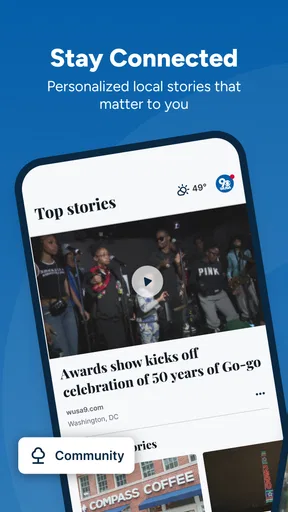
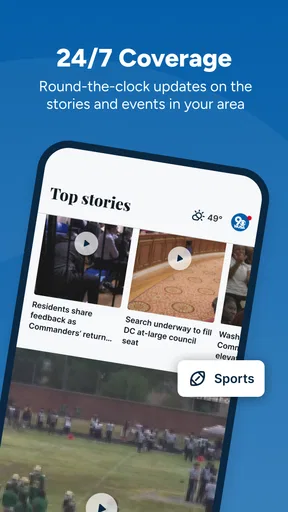
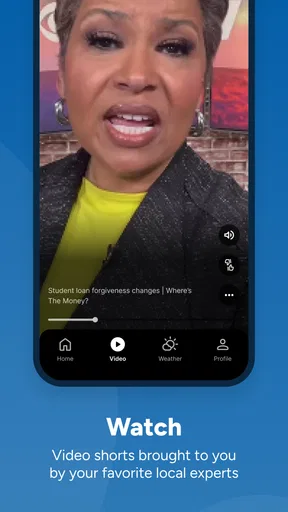
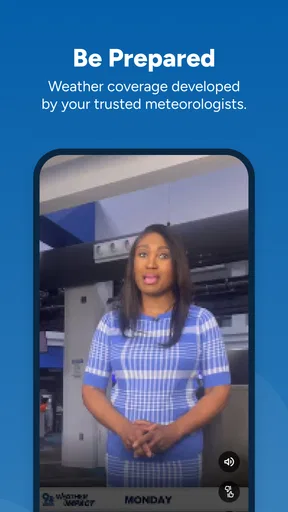
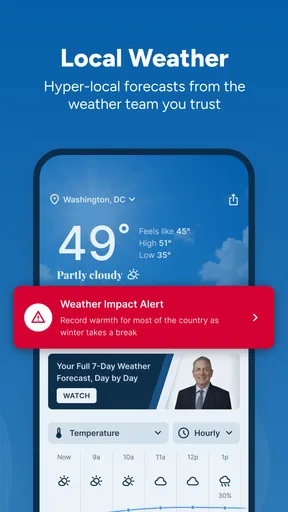
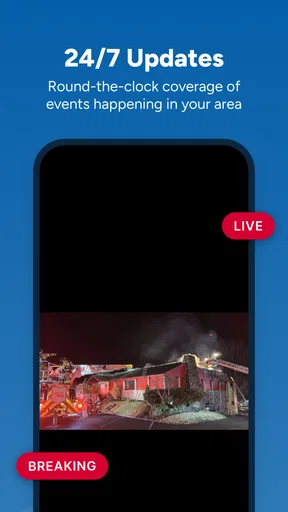
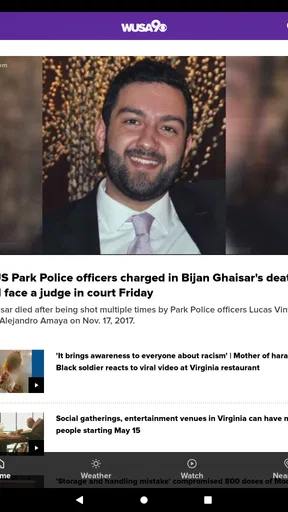
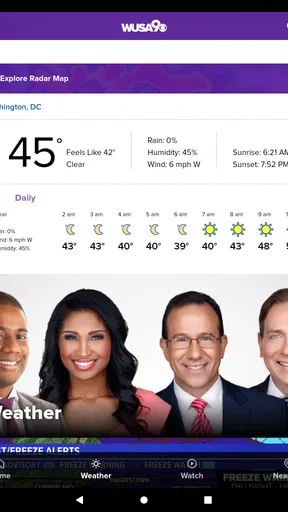
 Analysis by AppCompare
I use local news apps differently from national news apps. I am not opening them to read a long opinion piece about a distant story; I want to know what is happening close to home, whether the weather could change my plans, and which local developments deserve my attention today. WUSA9 News is built around that practical need, with coverage focused on Washington, DC, Maryland, and Virginia.
After spending time with it, I see it as a straightforward regional news companion rather than an all-purpose replacement for every source on my phone. Its strongest value is concentration: instead of filtering a national feed to find something relevant to the DMV area, I can begin with news and weather that already belong to this region. That makes it especially useful during a busy commute, a developing local story, or a morning when weather conditions matter more than headlines from elsewhere.
The app is free, aimed at Everyone, and belongs to the News & Magazines category. TEGNA develops it, and its current version is 50.21.1. Those details matter less than the way the app fits into a daily routine, but they help place it in context: this is an established local-news product, not a small personal bulletin board or a temporary event app.
How WUSA9 News feels in everyday use
I find WUSA9 News most useful when the phone is shared in a household but each person has a different reason to check local coverage. One person may be planning a commute, while another wants to follow a story closer to home; the app’s regional focus gives both a sensible starting point. In this section, I look at how that shared use can work without treating one household routine as everyone’s routine.
A regional starting point instead of a noisy national feed
The first useful decision is deciding what I want the app to do. If I need broad international coverage, market news, specialist reporting, or a huge selection of publications, I would choose a national news aggregator instead. WUSA9 News makes more sense when my question is local: what is happening in Washington, DC, Maryland, or Virginia right now?
That focus saves time. A general-purpose reader often mixes local stories with national politics, entertainment, technology, sports, and opinion from many publishers. The variety can be valuable, but it also means local information may be buried. Here, the regional identity is the reason to install the app. I can open it with a specific geographic expectation rather than hoping an algorithm remembers that local news is important to me.
For someone living in the area, working there, studying there, or visiting for several days, that can be more useful than a broad headline app. It also suits people who have moved away but still want a convenient way to keep an eye on the region. I would not treat it as a complete replacement for a newspaper subscription or a dedicated weather service, but it is a sensible first stop.
Worth Reading Before You Choose

EA SPORTS FC Mobile 26 Is a Bigger Football Game, but It Takes Time

Flipboard Shows What News Apps Must Do Beyond the Feed

Switching to Android Auto Means Rethinking Your Driving Routine

Google Calendar Makes a Crowded Week Easier to Manage

Ludo King Makes the Most of the Minutes Between Plans

Baby Panda World Brings Quick Play to Modern Phones, but Its Game Library Feels Busy
The weather connection is more practical than it may seem
News and weather belong together in a local app because many regional decisions are made hour by hour. A forecast can affect whether I leave earlier, change a weekend plan, carry rain gear, or pay attention to a developing situation. Keeping those subjects in the same place reduces the small friction of switching among separate apps.
My preferred workflow is to check the weather context first, then scan the headlines. If conditions look unsettled, I read local updates with a different level of attention. A weather item may be more important to me than a general headline on that particular morning, while a major local story can change the relevance of an otherwise ordinary forecast. The combination encourages that kind of quick, practical check.
There is a trade-off, though. People who want highly specialized weather tools may find a local news app less satisfying than an app dedicated entirely to radar, alerts, forecasting models, or detailed planning. I would use WUSA9 News for the regional picture and keep a specialist weather option available if severe-weather preparation or detailed forecasting is central to my routine.
A realistic morning scenario
Imagine I live in Maryland and commute toward Washington, DC. Before leaving, I open the app to see whether there is a local story that could affect the route or the workday, then check the weather before deciding what to wear and how much time to allow. I am not trying to conduct a deep research session; I want a compact briefing that connects local events with practical conditions.
Later, I might return to the app during lunch to see whether a developing story has changed. That second visit is where a local app can outperform a general feed: the geographic relevance is already built into the experience. I do not have to search for the name of my county or scroll past unrelated national items before finding something nearby.
For this kind of use, the app works best as a habit rather than a destination for long reading sessions. I would open it briefly at predictable points in the day, save deeper reading for stories that genuinely affect me, and avoid expecting every visit to deliver a major new event.
What the adoption figures suggest
The app has a 4.5 average from around 1.8 thousand ratings, with more than 100 thousand installs. That level of adoption suggests that it has found a stable audience among people looking for regional coverage, while the rating indicates generally positive reception. I treat those figures as useful context, not as a substitute for my own needs: a well-rated local app can still be the wrong choice for someone who wants worldwide coverage or a highly customizable news reader.
It is also free, which lowers the barrier to trying it. I can test whether its local focus fits my routine without committing to a subscription. The age rating of Everyone makes it suitable for a broad household audience, although adults should still use their own judgment about which news stories are appropriate for younger readers.
What the current version tells me about the app’s direction
When several people use the same device, I would keep expectations simple: the app is a local news and weather source, not a household organizer. Before making it part of a shared routine, I’d agree on who handles any account or notification choices on that device and avoid assuming that one person’s preferences suit everyone. The next section looks at those practical boundaries and how they can keep a quick news check from becoming a source of confusion.
An established product that continues to be maintained
WUSA9 News first appeared on April 25, 2012, and the current version is 50.21.1. The combination of a long release history and a modern version number tells me that this is a product that has gone through ongoing iteration rather than remaining frozen after its original launch. I cannot turn a version number into a promise about a particular feature, but it does support a reasonable conclusion: the app has been maintained as a continuing local-news service.
That matters for existing users because news apps depend on regular upkeep. Content presentation, compatibility, notifications, and the handling of changing editorial needs all benefit from an app that is still being developed. The important point is not that a high version number automatically means a perfect experience; it is that the product appears to have evolved beyond its early form.
The developer, TEGNA, also places the app within a larger local-broadcast publishing environment. I see that as a useful distinction from an independent news reader that simply collects links. The app’s identity is tied to one regional news operation, so its value comes from that focused editorial relationship rather than from trying to represent every source equally.
Why version history affects the way I judge it
When I review an established app, I look for consistency before novelty. A local news app does not need to reinvent the category every week. It needs to make current information easy to find, remain usable as phones and operating systems change, and avoid making a quick check feel like work.
WUSA9 News supports devices running Android 7.1 or later. That minimum requirement is relatively accessible for people using older compatible phones, although anyone with an especially old device should still consider overall performance and available storage before making it a primary daily tool. The broad compatibility is helpful for households where not everyone upgrades hardware at the same time.
For an existing user, the practical lesson is to evaluate updates by effect, not by the version label alone. If the app remains easy to scan and the local coverage stays relevant, incremental maintenance can be more valuable than a dramatic redesign. If an update changes navigation or notification behavior, I would spend a few minutes checking the settings and rebuilding my routine rather than assuming the old workflow still applies exactly.
Three useful habits that are easy to overlook
My first tip is to separate “quick awareness” from “full reading.” I use the opening scan to identify stories that could affect my day, then choose only the important ones for a closer read. This prevents a local-news app from becoming another endless-scroll destination and makes its regional focus more useful.
My second tip is to use geography deliberately. Washington, DC, Maryland, and Virginia are connected, but they are not interchangeable. A story that matters greatly to someone commuting through the District may be less relevant to a reader in a distant Maryland community. I pay attention to the location behind each headline instead of assuming that every item has equal importance for my own neighborhood.
My third tip is to compare the app’s local view with one broader source when a story has wider consequences. WUSA9 News can give me the regional angle, while a national publication may provide background or a different perspective. That is not a weakness unique to this app; it is the normal trade-off of choosing focused local coverage. The best workflow is often complementary rather than exclusive.
A fourth habit is to check the app at a consistent time instead of relying only on spontaneous browsing. A morning check can support planning, while an evening check can help me understand what developed during the day. This simple schedule gives the app a clear job and makes it easier to notice whether it is genuinely useful or merely occupying space on my phone.
Where the experience may feel limited
The same focus that makes the app convenient can make it feel narrow. Readers who want to build a personalized feed from many publishers, topics, and regions may prefer an aggregator. They may also want advanced controls over source selection, reading order, saved searches, or cross-platform synchronization. I would not choose WUSA9 News primarily for those expectations.
There is also a difference between having access to local news and having every kind of local information in one place. A user may still need separate tools for transit, emergency alerts, school notices, neighborhood discussions, or highly detailed weather analysis. The app can support awareness, but it should not be treated as the sole authority for every urgent decision.
Another possible friction is attention. Local news is valuable precisely because it is close to home, but that also means some stories may feel repetitive if I check too often or if my interests are very specialized. I get better results when I open the app with a purpose: a morning briefing, a weather check, or an update on a story I already care about.
Who should install it, and who should skip it
I would recommend trying it if you live in Washington, DC, Maryland, or Virginia and want one free place to begin a local-news routine. It is also worth considering if you work in the region, commute across its boundaries, or need weather and news context before making daily plans. The Everyone rating and accessible Android requirement make it a practical option for a broad range of users.
I would skip it if my main interest is international reporting, niche technology coverage, financial analysis, or a fully customized multi-source feed. In those cases, a national publication, specialist app, or news aggregator will probably serve me better. I would also look elsewhere if I need a dedicated emergency-alert system or detailed meteorological tools rather than a combined local news experience.
What I would watch as the app evolves
For future updates, I would pay attention to whether the app keeps its regional focus while making everyday scanning faster. The ideal direction is not simply adding more content. It is improving the path from opening the app to understanding what matters locally, especially when news and weather interact.
I would also watch how well the experience serves both longtime users and newcomers. Established readers should not have to relearn basic navigation after every redesign, while first-time users should quickly understand where to find the local information they need. Clear organization matters more to me than decorative changes.
Privacy and notification choices would be another area I would review whenever the app changes. News alerts can be useful during a developing local situation, but too many interruptions can make me disable them entirely. A good routine depends on being able to keep meaningful updates without turning the phone into a constant source of noise.
Finally, I would look for continued compatibility and steady editorial usefulness. The app’s long history, current version 50.21.1, and ongoing presence suggest a product with staying power, but its future value will depend on whether it remains relevant to how people actually follow regional news. Maintenance is important; thoughtful prioritization is even better.
My final take
WUSA9 News is a focused, free local-news app that earns its place by narrowing the field to Washington, DC, Maryland, and Virginia. I like it most as a daily starting point: a quick way to connect nearby headlines with weather and decide what deserves more attention. Its strength is not endless customization or worldwide breadth, but regional usefulness.
I would keep it alongside a broader news source rather than expecting it to cover every information need. Used that way, it avoids the main trade-off of local apps: less variety in exchange for more relevance. If your day is shaped by what happens in the DMV area, that trade is often worthwhile.
My recommendation is therefore straightforward. Try it if local awareness is your priority, especially if you want a no-cost option that can become part of a short morning or evening routine. Skip it if you need specialist reporting, extensive personalization, or a complete replacement for weather, transit, and emergency tools. For the right reader, its regional concentration is exactly what makes it useful.
Pros
- Fast access to breaking news and local updates in the Washington
- D.C. area.
- Live video coverage helps users follow major events as they happen.
- Weather forecasts include radar
- alerts
- and useful regional conditions.
- News categories make it easy to find traffic
- sports
- and community stories.
- Push notifications can keep you informed about urgent local developments.
Cons
- Coverage is primarily focused on the D.C.
- Maryland
- and Virginia region.
- Frequent notifications may feel excessive unless notification settings are adjusted.
- Some video reports may require a stable connection and use considerable data.
- Advertising can interrupt browsing and reduce the overall reading experience.
- Certain stories may load slowly during major breaking-news events.
FAQs for WUSA9 News
What is the WUSA9 News app?
WUSA9 News is a local news application focused on the Washington, D.C., Maryland, and Northern Virginia area. It provides access to breaking news, weather updates, traffic information, investigative reports, videos, and community stories. After exploring the app, its main strength is the way it combines regional coverage with quick updates for users who want to stay informed throughout the day.
What type of news and information can I find on WUSA9 News?
The app covers a broad range of local and regional topics, including politics, crime, education, health, business, entertainment, sports, and community events. It also includes weather forecasts, severe weather alerts, traffic updates, and live or recorded video reports. Coverage is especially useful for people living in or regularly traveling around the D.C., Maryland, and Virginia region.
Does WUSA9 News provide live news and weather alerts?
Yes, WUSA9 News is designed to deliver timely updates, including breaking news notifications, live coverage when available, and weather information for the local area. Users can typically enable alerts for severe weather and important regional developments. Notification settings are worth reviewing after installation, because receiving every alert may become distracting if you only want weather warnings or major breaking stories.
Is the WUSA9 News app free to download and use?
The WUSA9 News app is generally available as a free download for supported Android and iOS devices. Most news articles, videos, forecasts, and alerts can be accessed without a subscription, although the app may contain advertising. Availability of certain content or features can change over time, so users should check the current listing in the Google Play Store or Apple App Store before downloading.
Does WUSA9 News require location access?
Location permission is not always required to read the main news content, but allowing it can improve the experience by providing more relevant weather forecasts, traffic information, and local alerts. If you prefer greater privacy, you can deny access and manually select a location where the feature is supported. You can also change this permission later through your device’s settings.


